
Overcoming Physician Burnout
The rhythm of a clinical day is a demanding one—a relentless cadence of alerts, updates, and obligations. It begins before the sun rises, with a mental review of patient lists, and often ends long after it has set, with the final closing of an electronic health record.
The space between is a flurry of activity—rounds, consults, procedures, and the ceaseless documentation that shadows every clinical decision. In this high-stakes environment, it is easy to become consumed by the logistics of care, viewing the day as a series of tasks to be completed and a checklist of problems to be solved.
Over time, this unyielding pace and task-oriented mindset can quietly erode our sense of purpose, becoming fertile ground for physician burnout.
We enter the field of medicine with a profound sense of purpose, often inspired by a grand narrative of dramatic interventions and life-altering saves. While these monumental events do occur, they are the dramatic exceptions, not the daily rule.
To hang our professional satisfaction solely on these rare peaks is to set ourselves up for a slow and steady disillusionment—one of the core drivers of physician burnout.
The true, sustainable soul of medicine is not found in the blare of a code blue, but in the quiet hum of the moments in between. This is a reflection on those moments—the small, often overlooked instances of human connection that reaffirm our purpose and provide the resilience needed to navigate the pressures of a modern medical career.
It is an invitation to find meaning not in the extraordinary, but in the margins of the ordinary—an essential mindset for preventing physician burnout.
The Quiet Power of Shared Present Emotion
In an era increasingly shaped by artificial intelligence and sophisticated algorithms, there is a temptation to believe that technology can replicate, or even replace, every aspect of human endeavor.
AI can process vast amounts of data, identify patterns, and assist with complex diagnoses, yet it fundamentally lacks the capacity for genuine human emotion. It can simulate empathy through carefully crafted responses. Still, it cannot truly feel the grief of a family, the relief of a positive prognosis, or the nuanced fear behind a patient’s questions.
The human elements of compassion, intuition, and the shared burden of suffering remain the exclusive domain of human interaction. And when these emotional connections are diminished or displaced by digital efficiency, the result is not just a loss of meaning—it is a quiet accelerant of physician burnout.
It is in these deeply emotional spaces that the true art of medicine resides, anchoring our profession in an irreducible human connection that no algorithm can ever fully capture or replace. Reclaiming these moments is essential to reversing the tide of physician burnout.
The Currency of Collegial Connection
The immense pressure of clinical responsibility can be an isolating experience, and physician burnout often begins in these quiet, unspoken moments of emotional fatigue.
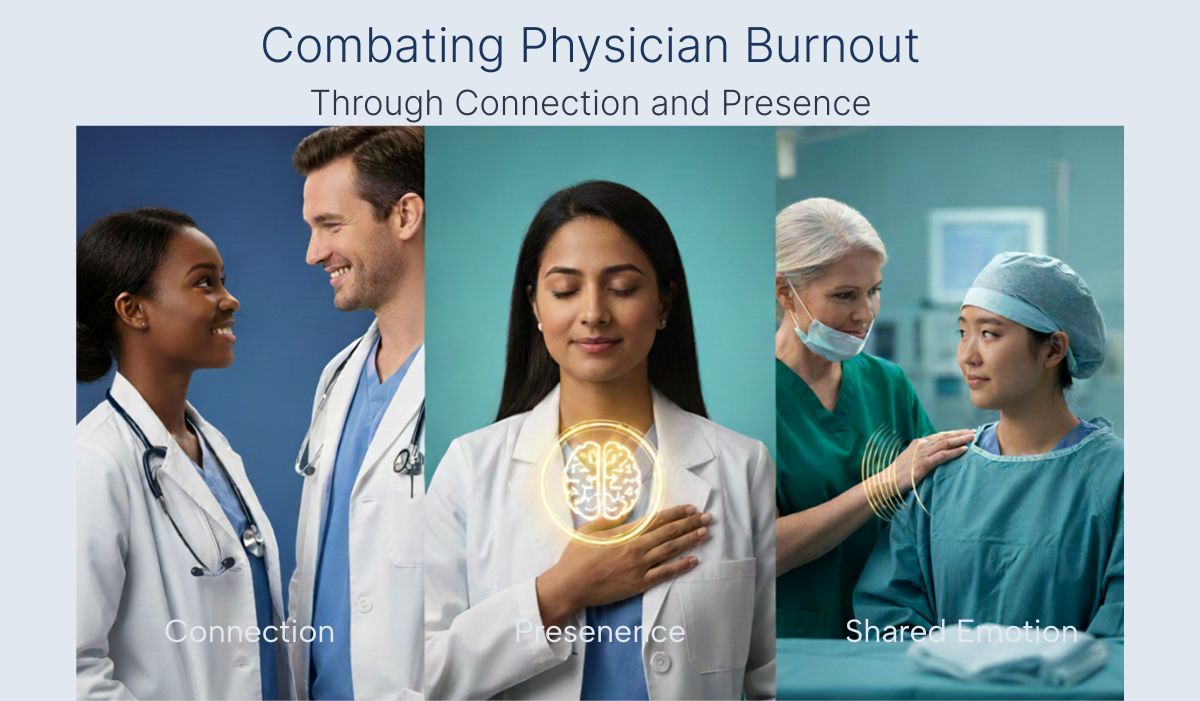
In a field where perceived certainty is highly valued, it can be challenging to demonstrate vulnerability or share the psychological toll of a complex case. This is why the small interactions with our colleagues—the currency of a shared glance, a quick word of encouragement, a moment of shared humor—are so vital.
They are deposits into an emotional reserve that is constantly being depleted by the demands of care, and their absence can accelerate the slide into physician burnout.
Consider the story of a junior surgical resident after a grueling multi-hour procedure. The case had been unexpectedly complex, and while the outcome was positive, she was mentally and physically exhausted, second-guessing every decision she had made under pressure.
As the team was breaking down the room, the veteran scrub nurse, a woman of few words, caught her eye. The nurse nodded and said, “Nice work in there, Doctor. You stayed steady.”
That was it—a seven-word sentence. Yet, for the resident, it was a lifeline.
It was an acknowledgment of the unseen struggle, a moment of validation that pierced through the fog of physician burnout and self-doubt. That small gesture reframed her entire experience of the day, transforming it from one of internal criticism into one of quiet accomplishment.
It underscores a fundamental truth: our teams are not just logistical assets; they are our most immediate and essential support system.
A culture of mutual respect and acknowledgment, built through these tiny, consistent interactions, is one of the most powerful tools against the professional isolation that fuels physician burnout.
In fact, research consistently shows that strong peer support is a key factor in mitigating stress and physician burnout among healthcare professionals. In fact, research consistently shows that strong peer support is a key factor in mitigating stress and burnout among healthcare professionals.
Discovering the Person Within the Patient
The electronic health record, for all its benefits, has subtly nudged us toward viewing our patients as an aggregation of data points—a collection of problems to be managed. This shift, while efficient, can contribute to physician burnout by distancing us from the human stories that give our work meaning. Reclaiming our sense of purpose often requires a conscious effort to look past the chart and see the person. This does not require a significant investment of time; it simply requires a moment of genuine curiosity.
An internist in a busy primary care practice made it a habit to ask one non-medical question during each patient visit. During a follow-up with an elderly gentleman being managed for several chronic conditions, he noticed a small, faded photograph of a smiling young woman tucked into the corner of the patient’s wallet as he retrieved his insurance card. “Your daughter?” the doctor asked. The patient’s demeanor instantly changed. His shoulders relaxed, and a warm smile spread across his face. “My wife,” he said. “That was on our first trip to the coast, back in ‘68.” For the next two minutes, he was not just a patient with hypertension and diabetes; he was a husband, a traveler, a man with a rich history. The conversation was brief, but it fundamentally altered the dynamic of the visit. It reminded the physician that his role was not merely to manage disease, but to care for the human being who is experiencing it. These small acts of connection are not just meaningful—they are protective. They help buffer against the emotional exhaustion and depersonalization that define physician burnout, restoring the relational core of medicine that sustains us.
Cultivating the Practice of Noticing
These moments occur around us every day, but in the rush to be efficient, they are easy to overlook. Yet it is precisely this constant push for productivity that contributes to physician burnout—where emotional exhaustion and depersonalization quietly take hold. Finding meaning in the margins is therefore not a passive hope, but an active practice. It is the discipline of noticing. It does not require adding more to an already overwhelming schedule; instead, it involves bringing a different quality of attention to the tasks we are already performing. It is the conscious choice to lift our gaze from the screen and make genuine eye contact. It is the decision to pause for thirty seconds before entering a new patient room to clear our minds and be fully present. It is the deliberate act of verbalizing our appreciation for a colleague’s assistance—small gestures that counteract the emotional erosion of burnout.
The relentless pressures of modern healthcare and the rising tide of physician burnout are real and significant. Yet, the most potent antidote may not be a large-scale systemic solution, but the quiet, cumulative power of these small, authentic human connections. The future of medicine will be defined not only by our scientific and technological innovations but by our commitment to preserving the simple, profound act of one human being caring for another. It is in the unseen moments, the quiet margins of our days, that we not only heal our patients but also sustain ourselves, continually rediscovering the heart of our calling.
Read about how Clinical Communication tools can improve Overall Efficiency: Clinical Communication & Collaboration (CC&C) Challenges in the Healthcare Industry.
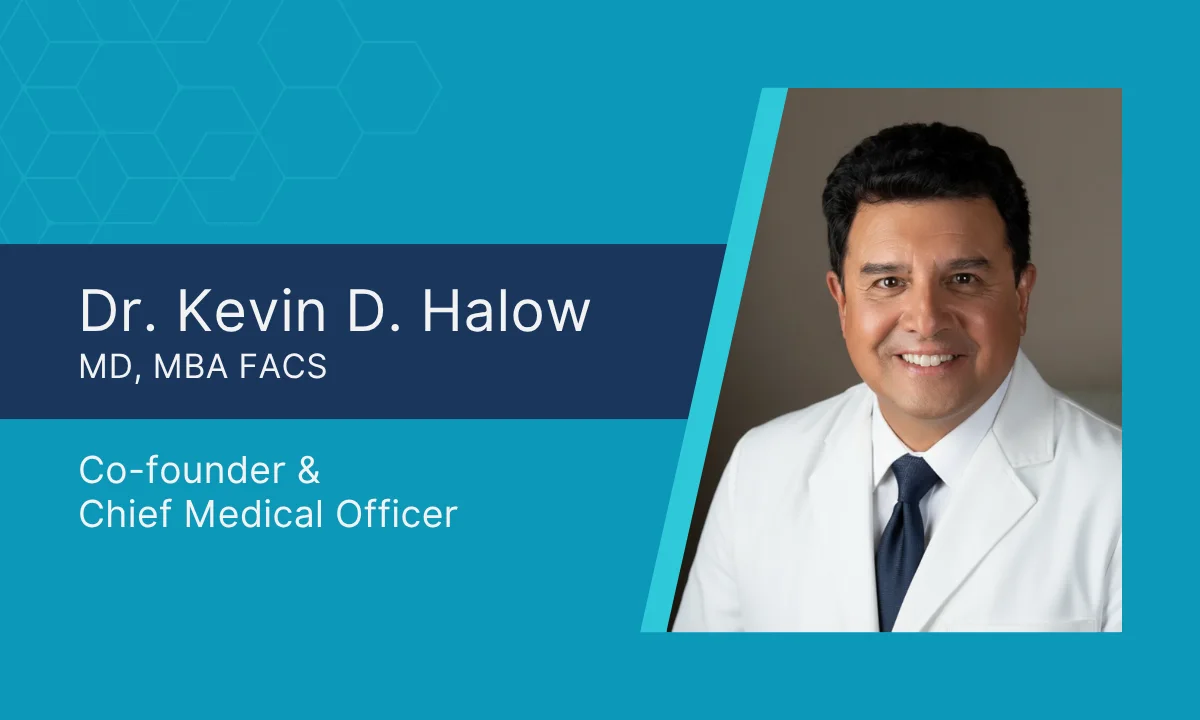
A Physician’s Profile of Dr. Kevin Halow, MD, MBA, FACS
This video offers a personal look at Dr. Kevin D. Halow, MD, MBA, FACS, where he discusses his career in surgery and his passions, providing deeper context to the perspective shared in the article.